


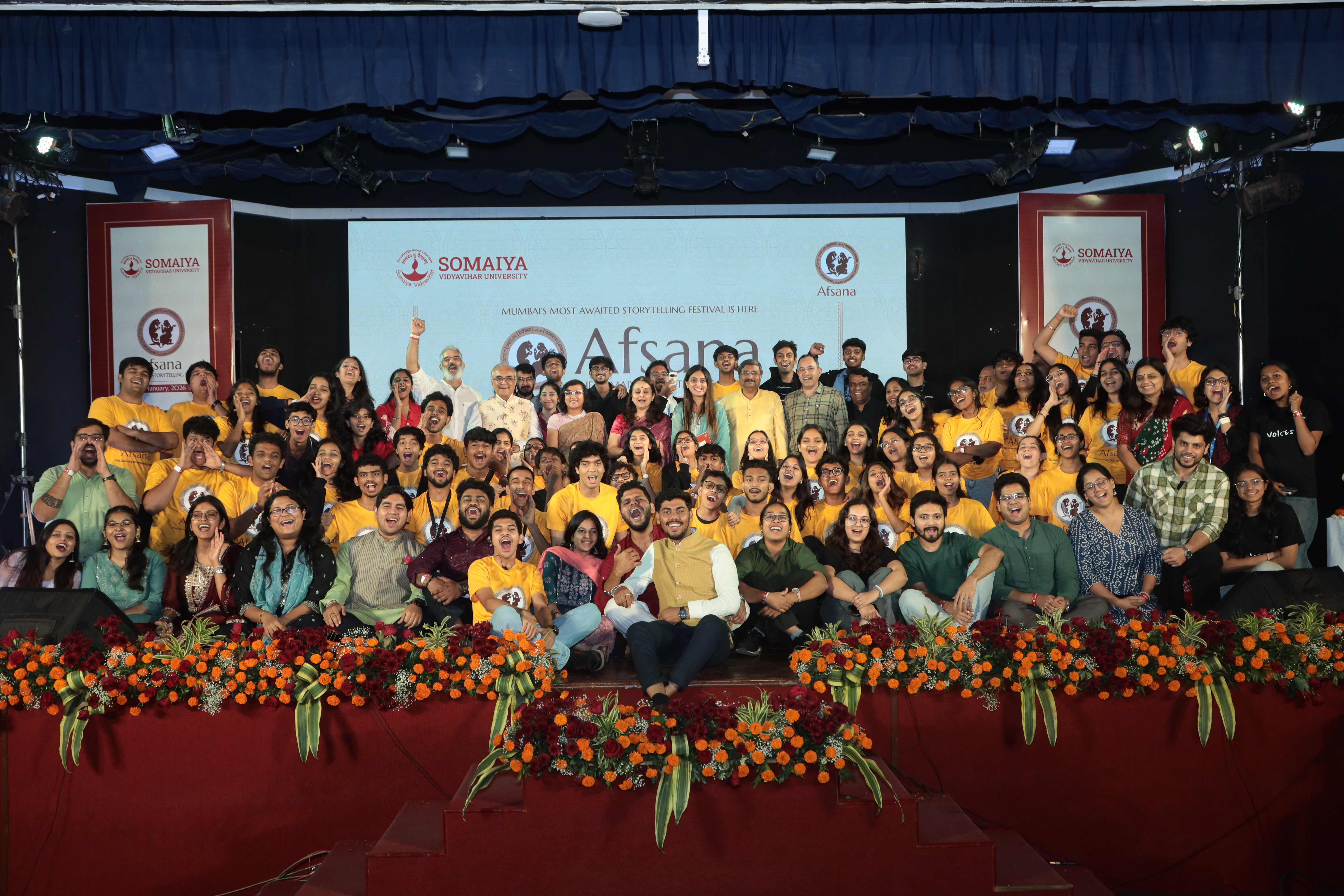
At a time when attention is fragmented, and stories are increasingly consumed at speed, Somaiya Vidyavihar University chose to slow the narrative down. Afsana 2026 – The Somaiya Storytelling Festival brought listening back to the centre, positioning storytelling not only as cultural expression, but as a vital way of learning, reflecting, and building empathy.
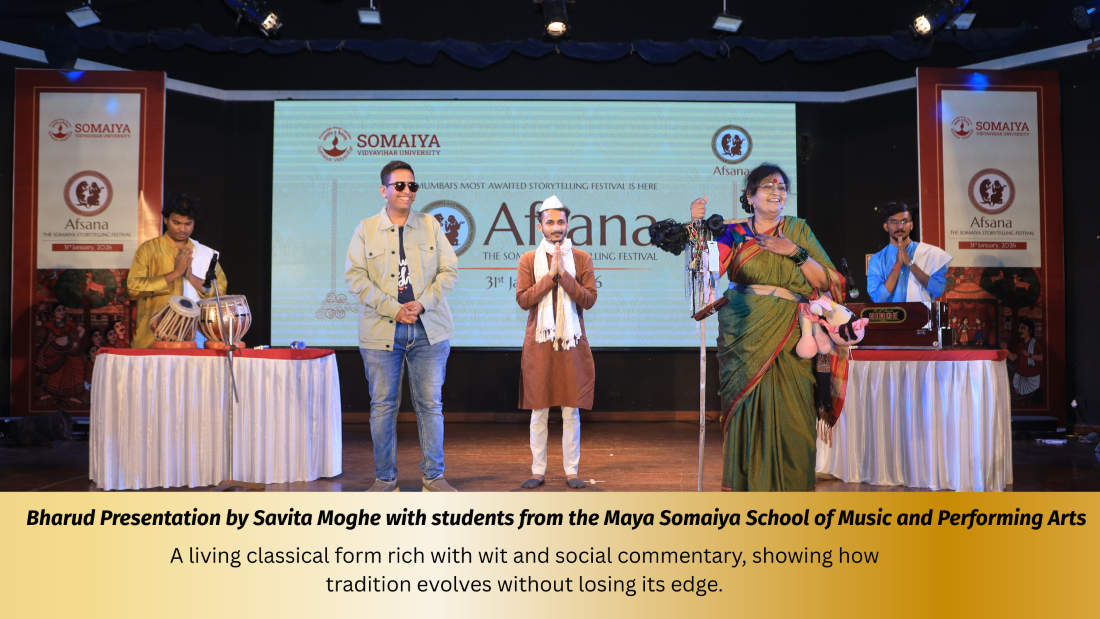
Conceptualised as part of the University’s sustained effort to integrate storytelling into education and cultural engagement, Afsana 2026 brought together over 30 storytellers, performers, educators, and artists, along with 10+ workshops and participatory experiences. The festival wove together oral traditions, folklore, bardic narratives, satire, and contemporary storytelling practices, creating a shared space where stories were experienced as lived knowledge rather than performance alone.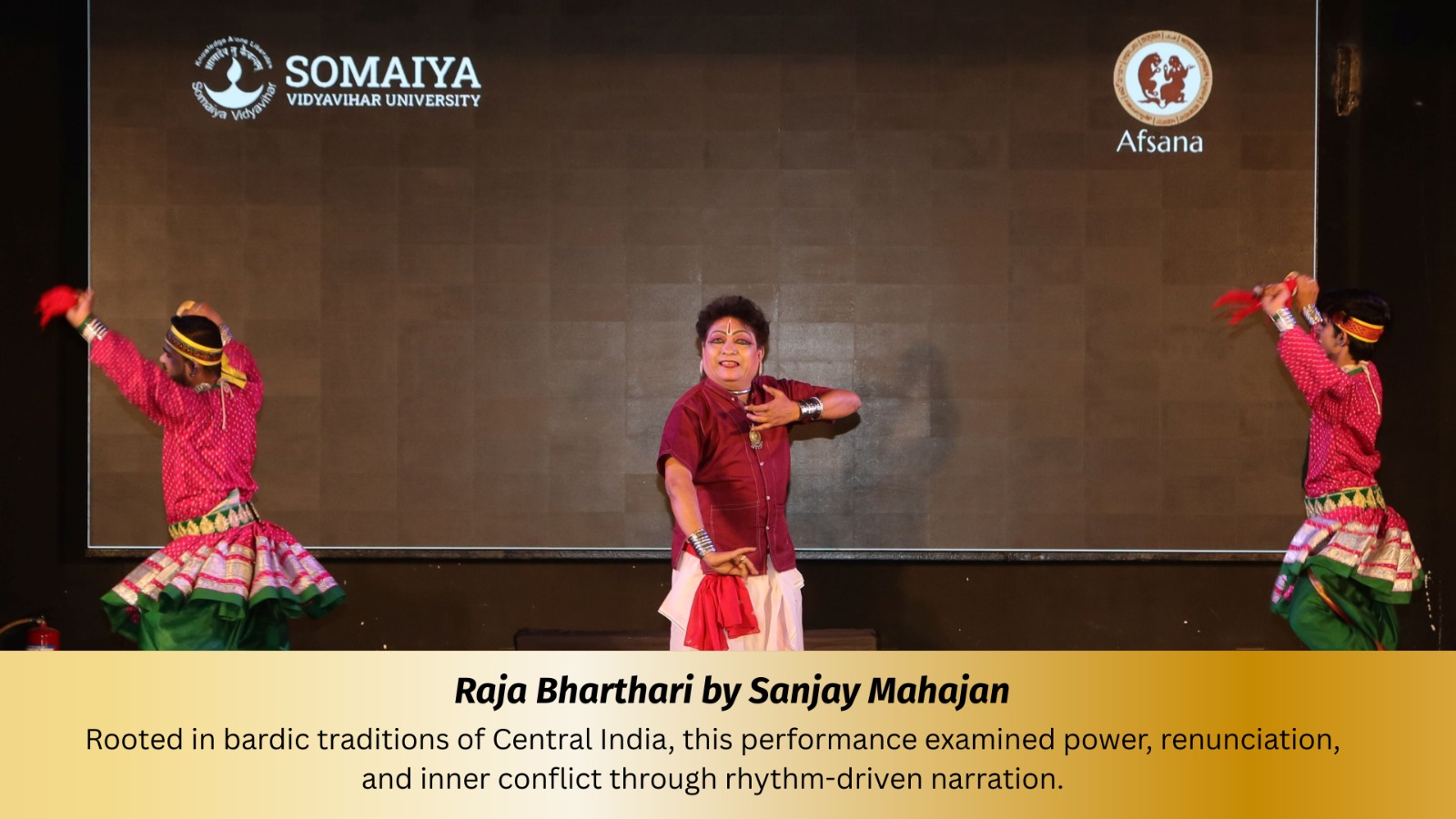
This edition of Afsana placed a deliberate focus on Central India, particularly Madhya Pradesh and Chhattisgarh, foregrounding regional folklore, Pandwani traditions, Bharthari narratives, satire, and tribal storytelling forms. By centering voices that are often underrepresented, the festival reflected Somaiya Vidyavihar University’s belief that education must engage with cultural plurality and lived realities beyond dominant narratives.
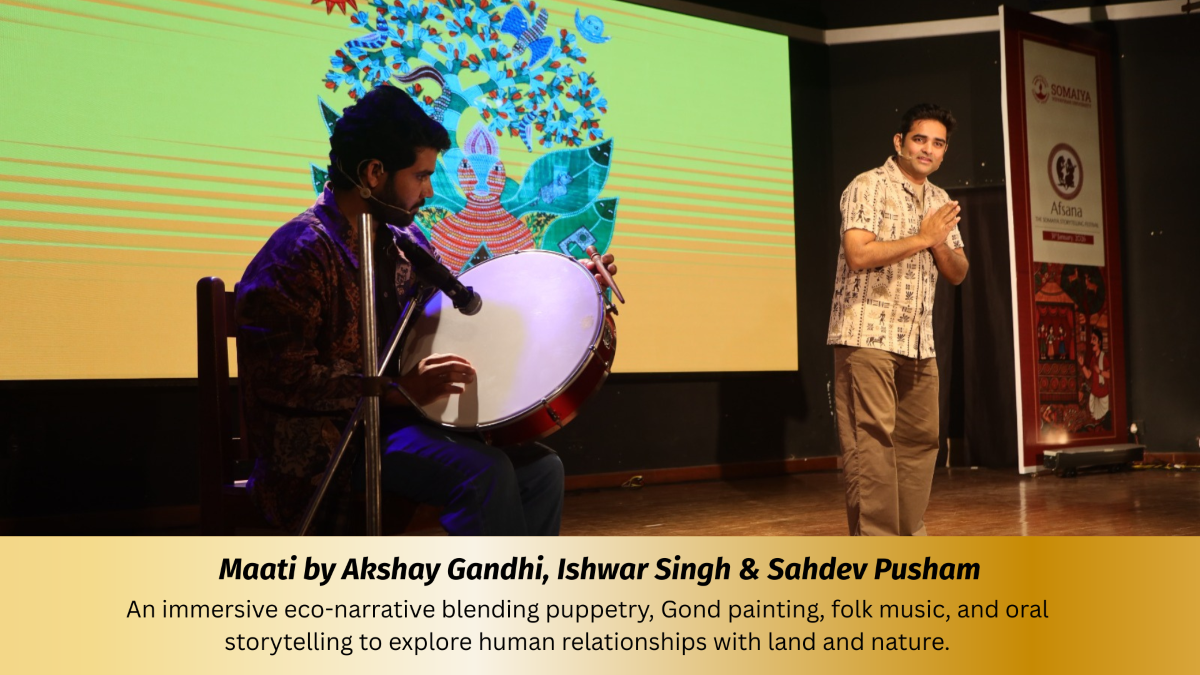
Anchored in the theme Bindu: Centred Metaphors, the festival invited artists and participants to question what it means to locate a centre at all. Rather than imposing the theme visually, storytelling allowed it to emerge organically through voice, movement, rhythm, and narrative structure. With minimal reliance on spectacle, the storyteller’s presence became the primary medium, encouraging audiences to listen actively and participate emotionally.
The festival opened with a first-grade student from The Somaiya School, underscoring a principle shared across the Somaiya ecosystem: storytelling begins early and evolves with the learner. This opening moment framed stories as points of origin, shaping imagination, emotional awareness, and experiential learning from the earliest years.
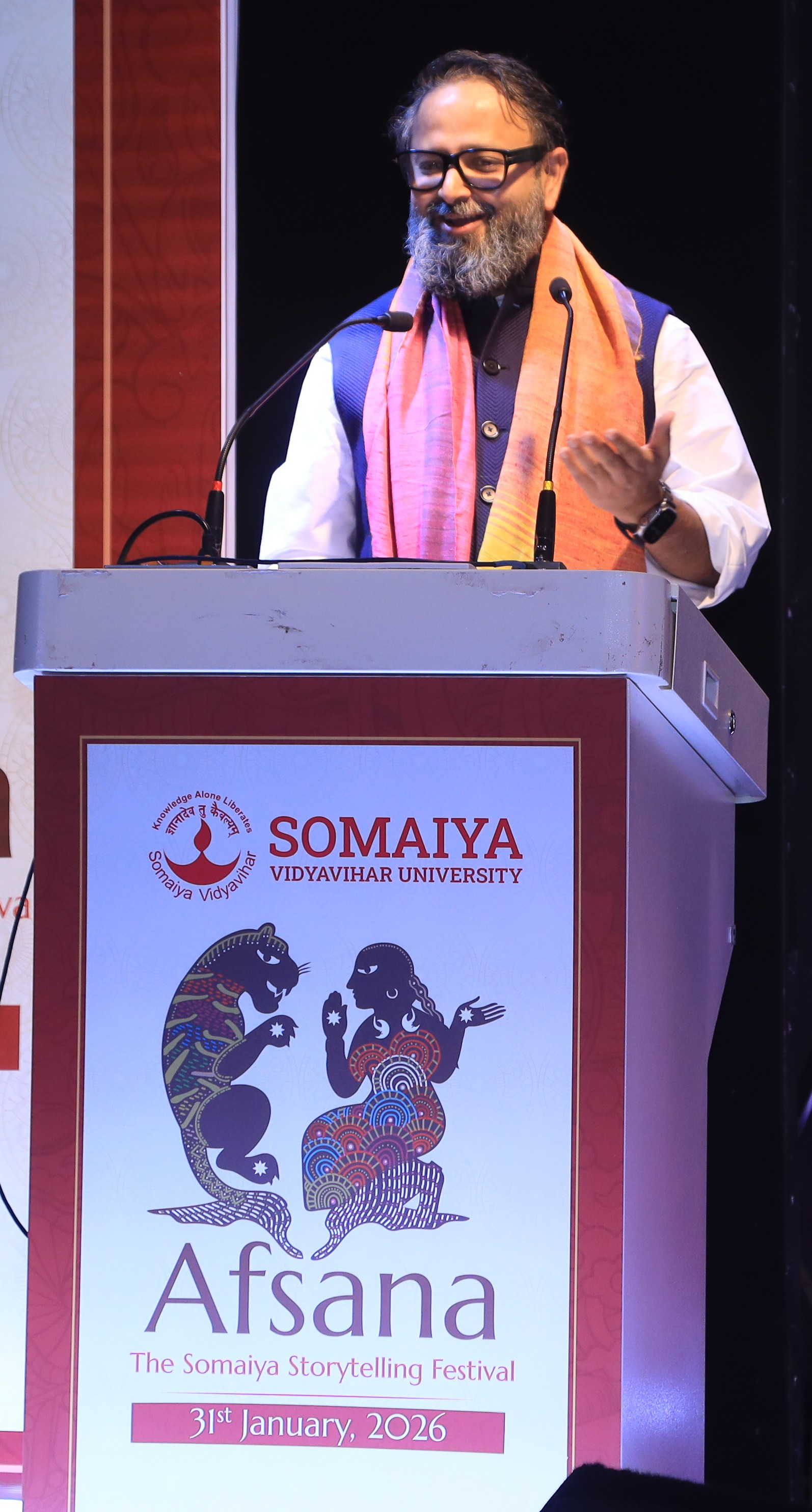 At the other end of the spectrum was Nikhil Advani, acclaimed filmmaker and master storyteller. His cinematic insight highlighted how storytelling transcends medium, age, and experience. “I used to make up stories when I was a kid, sometimes to cover up mistakes, sometimes just for fun. And yet today, I find myself inaugurating a storytelling festival. That journey taught me that every story, whether it becomes a film or not, must be clear at its core. For a film, every scene, every moment, must satisfy that one line: the essence of the story. That discipline shapes how we tell stories, whether on screen or in life.”
From a child’s imagination to the craft of a seasoned professional, the festival emphasised that stories have no bounds.
Storytelling as Pedagogy and Practice
Beyond performances, Afsana functioned as an immersive learning environment. Student-led installations interpreting Bindu, interactive workshops, and participatory experiences ensured that storytelling remained dialogic and inclusive. Indigenous and regional voices occupied central space, reinforcing the University’s commitment to learning that is experiential, reflective, and rooted in context.
Through initiatives such as Afsana, Somaiya Vidyavihar University continues to embed storytelling into its academic and cultural framework, recognising its role in developing empathy, critical thinking, cultural literacy, and imagination. Tradition was engaged without being preserved as static heritage; stories remained dynamic, personal, and responsive to the present.
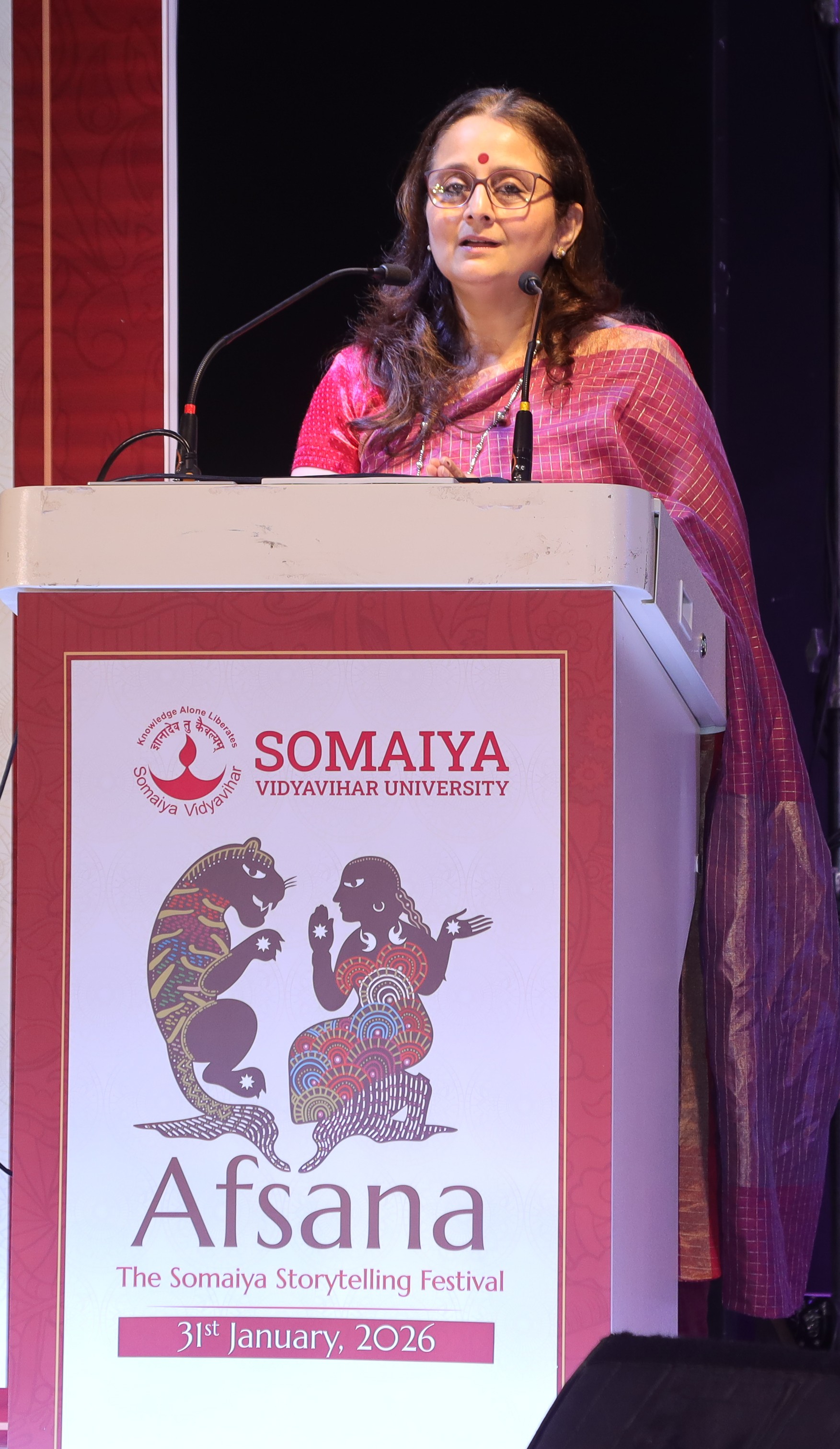 Amrita Somaiya, Festival Chair of Afsana, said: “Some of my earliest memories are of sitting quietly while stories unfolded around me, at home, on journeys, in family gatherings. Stories were not just entertainment; they taught empathy, resilience, humour, and ways to live. Storytelling is about presence, about sitting across from someone and allowing their stories to change you. At Afsana, we hope students listen with curiosity, generosity, and open hearts, letting each story shape their imagination and understanding.”
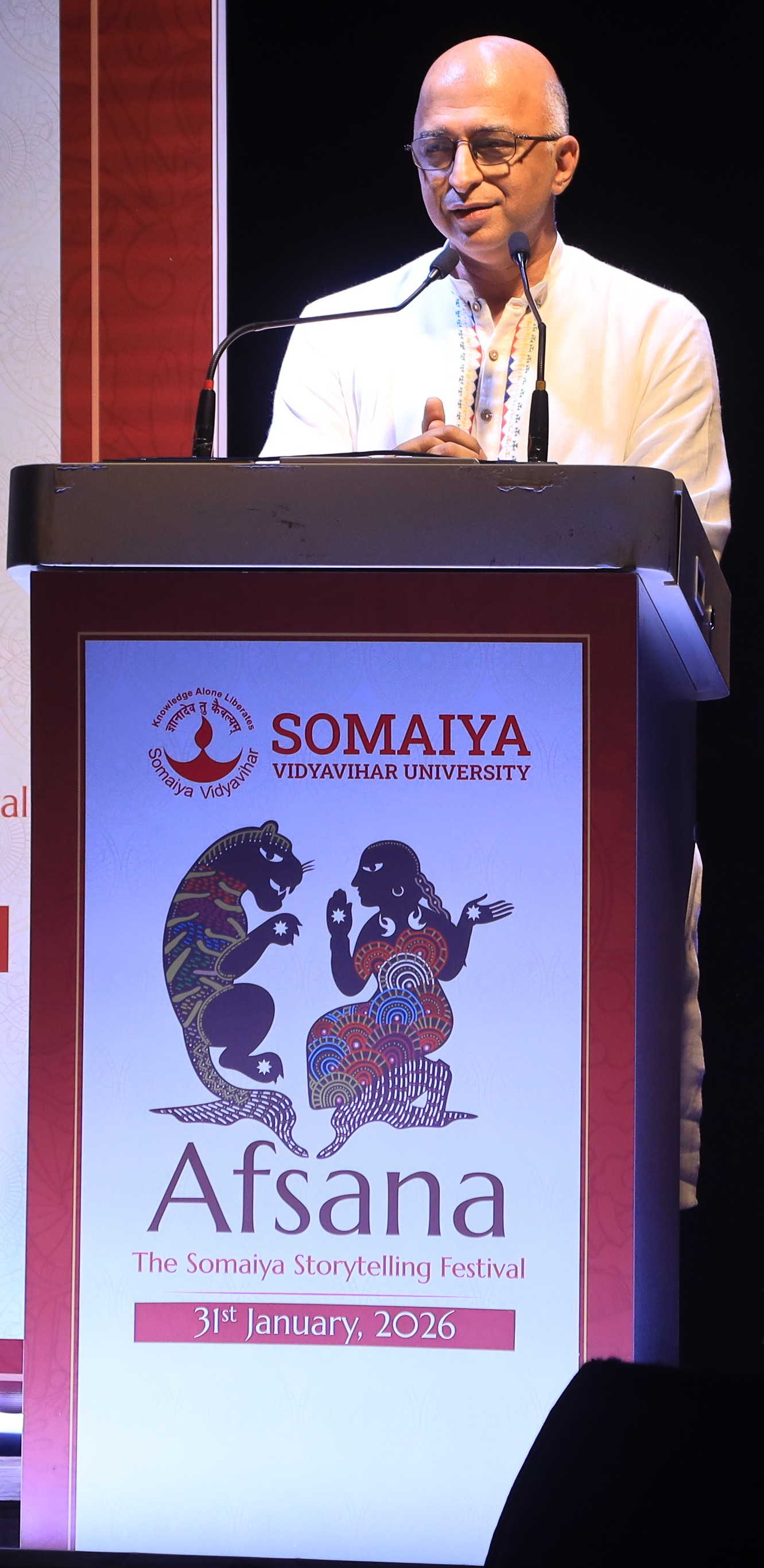 Samir Somaiya, Chancellor of Somaiya Vidyavihar University, added, “While my grandfather did not study beyond school, he still dreamed of creating a ‘VidyaVihar’, a world he had never experienced. Can we also imagine a and try to create world beyond our own experience? A world of our dreams? That, for me, is the true challenge.’ He further highlighted a couplet of Bashir Badr:
अगर फ़ुर्सत मिले पानी की तहरीरों को पढ़ लेना
हर इक दरिया हज़ारों साल का अफ़्साना लिखता है
He further added, “Just like every river writes a story of thousands of years, every child who passes through here writes their own stories. Our role is to create spaces where these stories can unfold and inspire generations.”
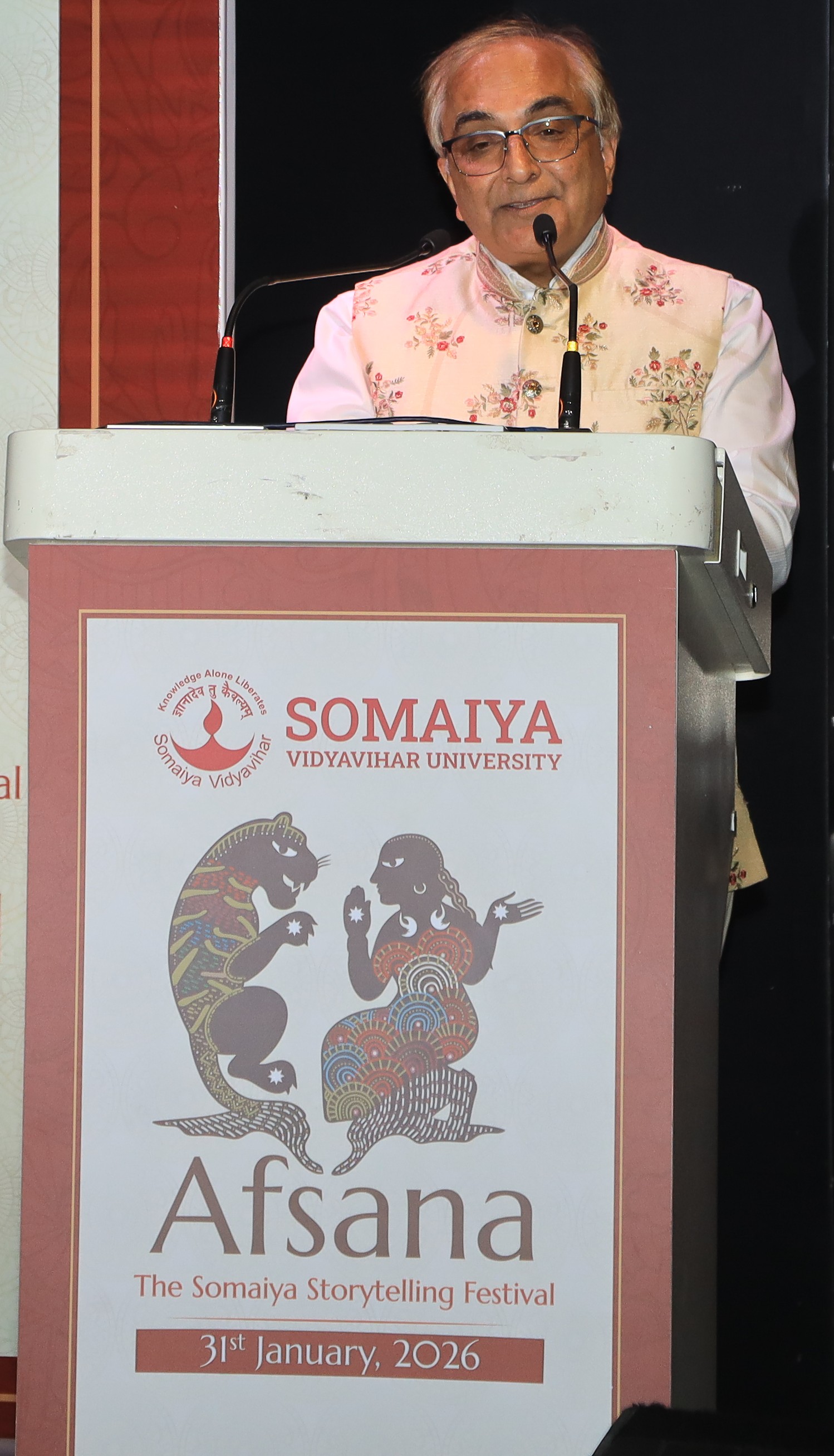 Ajay Kapoor, Vice-Chancellor of Somaiya Vidyavihar University, said: “Storytelling sounds simple, but it is an art. It connects intellect, heart, and body, weaving tradition with technology, and leaves a mark that lectures alone cannot. My grandfather was a wonderful storyteller, chasing him during summer vacations just to hear his stories taught me that a story, when crafted with imagination and heart, shapes the mind, the heart, and the soul. That’s the power of a good story,it stays forever.”He added, ‘Our role as an educational institution is not only to teach from books but to nurture the whole student, body, heart, and intellect. By bringing storytellers, performers, and creative minds into our ecosystem, we ensure that learning is lived, experienced, and transformational. Planning, preparation, and aligning mind, body, and heart, this is how vision becomes reality.’’
By the end of the day, Afsana 2026 proved itself not merely an event, but a living ecosystem where artists, students, faculty, and audiences co-created meaning. In a fast-paced digital world of algorithmic stories, the festival reaffirmed presence, empathy, and the power of human voices. Tradition and pedagogy converged, creating a narrative that will linger long after the curtains fell.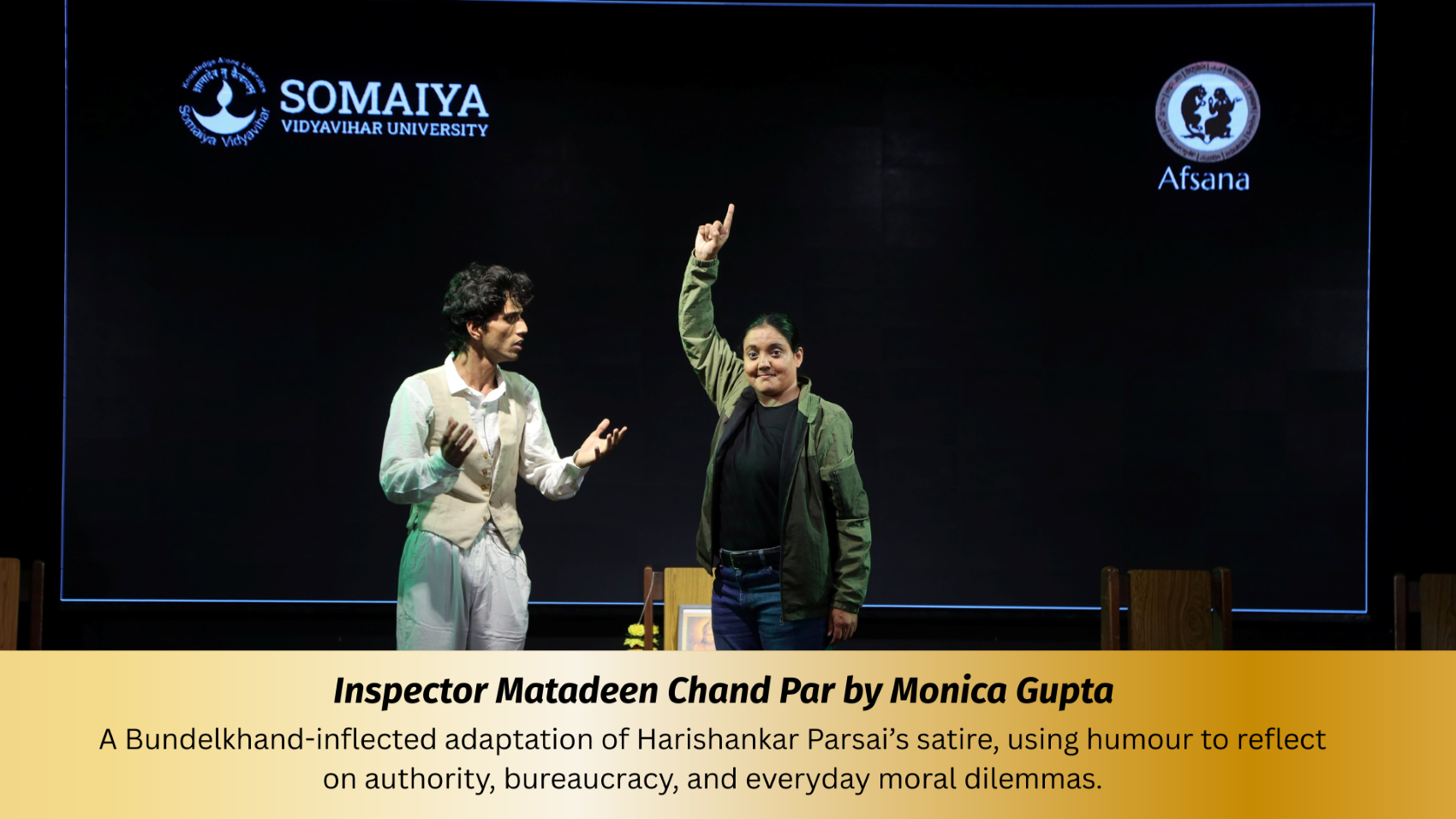



Leave a Reply